
From Drive to Survive to a Fight for Attention: has the sports-doc boom hit saturation?
Credit: Netflix
By Lisa Parfitt
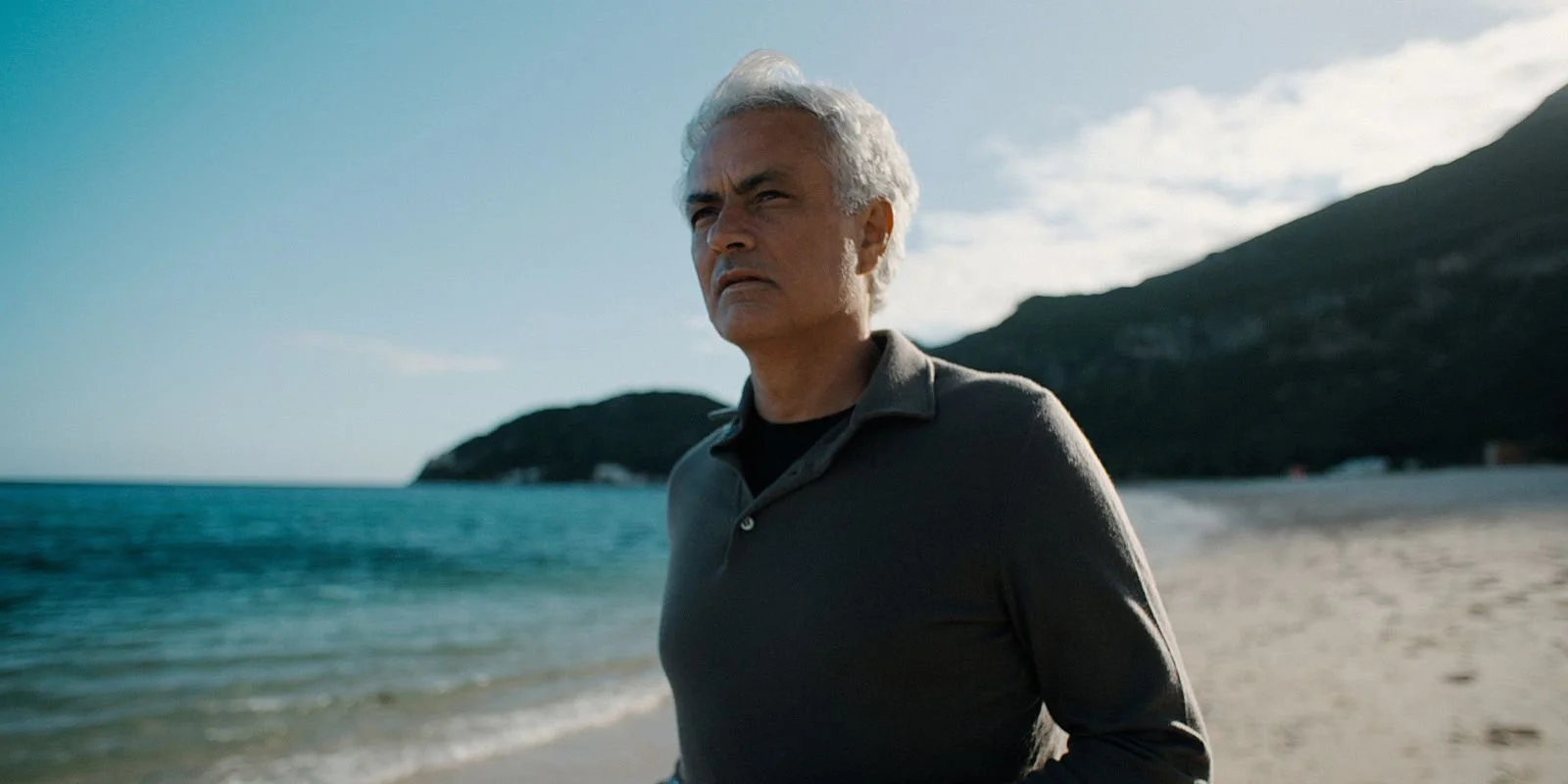
“You are pushing me to speak about myself”, Jose Mourinho from the Netflix documentary Mourinho. What an extraordinary complaint in the face of the Netflix production crew. In this moment I pondered, if The (A) Special One is so uncomfortable with personal exploration then what’s in it for him, and more importantly what’s in it for me? I love a sports doc as much as the next sports marketing nerd, but this one left me cold and knowing only something I already knew - I still don’t much like the guy.
A decade on from the point at which streaming began reshaping mainstream viewing habits, there's a question worth asking; has the sports documentary lost its mojo?
There's a version of the sports doc story that is very familiar. Formula 1 opens its garages, paddocks and politics to a camera crew. Michael Jordan gives himself and the Chicago Bulls the definitive archive treatment. Two Hollywood actors buy a fifth-tier Welsh football club and “accidentally” turn it into one of the most compelling stories in world football. Each time, the same thing happens, people who have never watched - *insert XXX minutes of XXX sport* - find themselves emotionally invested in a documentary about people they've never previously heard of.
The decade that built the machine
In 2016, paid-for on-demand services reached 26% of UK adults in a typical week, rising to 57% among 16 to 24-year-olds. Netflix reached just 23% of adults weekly. Streaming was growing rapidly, but it had not yet become the default viewing habit it is today. The sports documentary arrived at exactly the right moment. All or Nothing and Sunderland 'Til I Die demonstrated that sport already contained the ingredients of great television. Every season offered a ready-made narrative arc of ambition, adversity, triumph or failure. Then came Formula 1: Drive to Survive.
When Netflix launched the series in 2019, it transformed the sports documentary format into something much bigger. By the time The Last Dance arrived during lockdown in 2020 (helped by a captive audiences marooned at home), the playbook was firmly established - find compelling characters, secure unprecedented access, build genuine jeopardy around real-world events and audiences will follow, whether they care about the sport or not.
What followed was an explosion of copy-cats all wanting the Drive to Survive effect. Untold. Welcome to Wrexham. Break Point. Full Swing. Tour de France: Unchained. Beckham. Football, tennis, golf, cycling, rugby, boxing. Every platform wanted its own breakout hit and new audiences.
The commercial logic was obvious. According to Ampere Analysis, there were 3,760 sports documentaries available across more than 80 subscription streaming platforms in February 2024, with another 47 in production. Sports documentaries offered streamers a comparatively cost-effective way to tap into the emotional power of sport without paying the price of live broadcast rights. They also provided something that rights holders could only dream of… a way to create new fans rather than simply serve existing ones.
If the boom has ended, nobody told commissioners. Ampere recorded 103 new sports documentaries and docuseries released globally between May and July 2024 alone. In July, sports documentaries accounted for a record 25% of all new documentary releases worldwide. Sports documentaries represented 12% of all first-run documentary releases in 2024, up from 6% in 2020. The market was still expanding and supply was no longer an issue, but attention was becoming one.
The problem isn't making documentaries. It's getting people to watch them.
The more documentaries that followed the same aforementioned formula, the less compelling it becomes to watch. For a few years, "behind-the-scenes sports access" was enough. It felt fresh. Audiences were discovering worlds they had never previously been allowed to see.
But, today access has either become restricted or sanitised. These documentaries only work when audiences believe they are seeing something real and revealing.
The cancellation of Netflix tennis series Break Point after two seasons provides a useful example. Reports suggested producers struggled to secure meaningful access to some of the sport's biggest stars while also failing to generate the audience numbers that Drive to Survive achieved. Manchester United reportedly walked away from plans for an Amazon access documentary amid concerns that constant filming would become a distraction for the first team.
The streamers face a broader challenge, the UK's streaming market has matured and by last year 68% of UK households subscribed to at least one streaming service which is unchanged in four years. Among viewers surveyed by Ofcom, 43% felt there were too many video-on-demand services available, while 38% said they found the volume of content overwhelming known as ‘Netflix Syndrome’. You know the behaviour…flicking from streaming platform to streaming platform, Sky to terrestrial channels in a desperate search for something new and bingeworthy, but all too often reverting to doom scrolling on the phone. This also describes the challenge facing most documentaries, and that is discovery. In a world where every platform is producing more content than ever, attention is scarce.
The irony is that one of the biggest sports properties of the streaming era wasn't a documentary at all. Most viewers had no prior interest in AFC Richmond because AFC Richmond doesn't exist. Disney’s Ted Lasso proved that people care about characters and audiences show up for stories. For a while, sports documentaries delivered those stories better than anyone else in a format that worked, but access has been sanitised and the format isn’t enough.
A course correction
None of this means sports documentaries are going away, far from it. In 2026, Netflix launched its largest-ever UK sports slate campaign, built around programming including Untold UK, Mourinho and a daily FIFA World Cup edition of The Rest Is Football. At the same time, they have continued expanding into live sports programming, including WWE, NFL games, boxing and the US rights for the FIFA Women’s World Cups in 2027 and 2031. For Netflix sports documentaries have become part of a much broader sports strategy.
The popularity of sports documentaries is still clearly visible in supply, but a course correction is needed as attention wanes with oversupply of content and harder discoverability. In my opinion the format has lost its mojo but not the genre. When the visual language of a documentary set-up on the streaming platforms becomes a meme you know it’s had its day! Viewers respond to a combination of access, characters, culturally significant moments and a story that is strong enough to justify the camera crew. And, for the record if a camera-crew is in your living room filming your story you’re going to need to talk about yourself…and spill the tea.
The boom in sports documentary’s hasn’t ended, the audience is more selective and savvier.