
Is the BBC Right to Move The Women’s Football Show to YouTube?
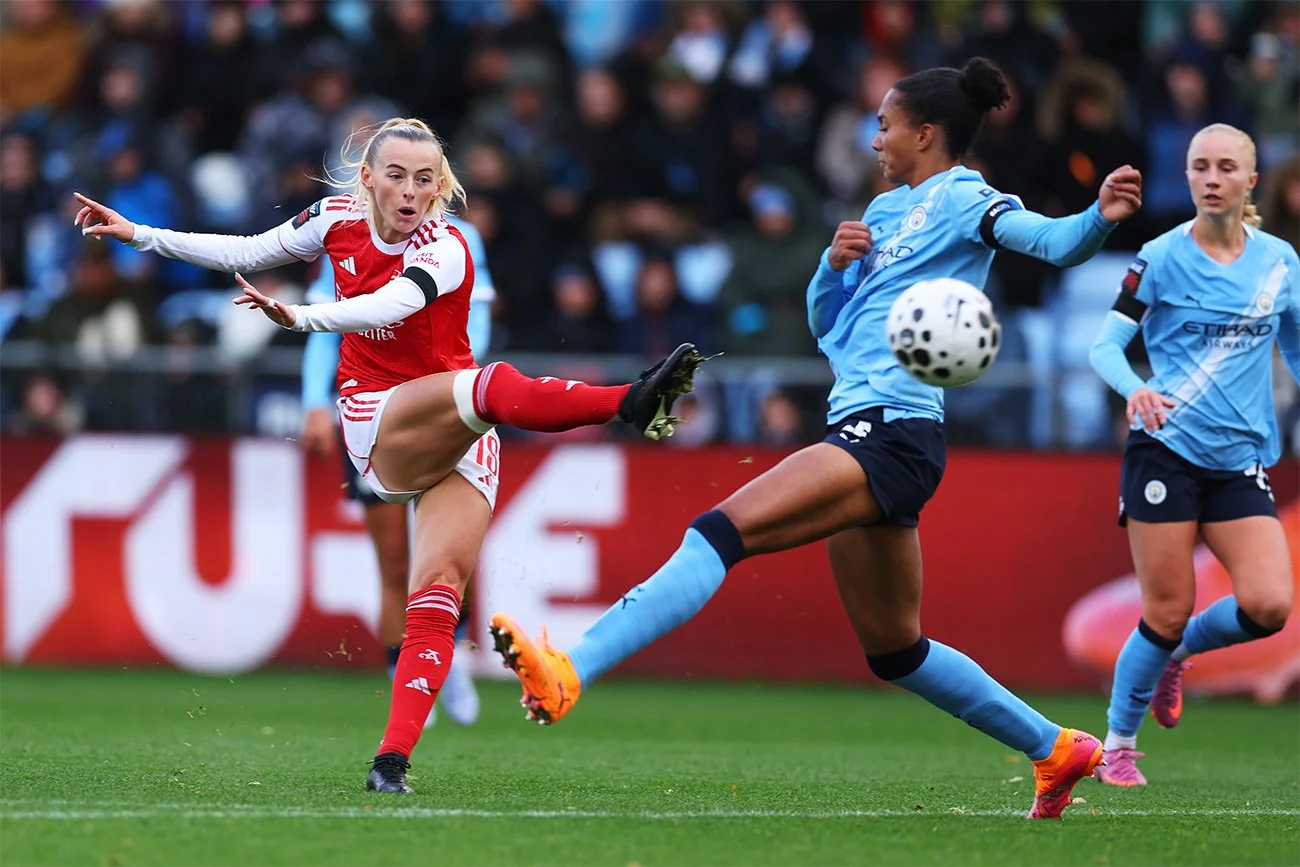
Credit: Getty
By Lisa Parfitt
I’ll admit that I rarely have time for a full 90 minutes of football on a weekend - unless it’s under-13s. So, as I pumped up 22 size 4 footballs by hand on a Sunday morning, I watched Women's Super League (WSL) highlights on my phone outside in the sun with a cuppa.
That specific viewing habit has become the center of a major debate ahead of the opening fixtures: the BBC’s decision to remove The Women's Football Show from its linear television schedule and pivot to a digital-first strategy.
The announcement has reignited a familiar conversation: is women's football taking a step forward or backward? Some view the move as another instance where women’s sports must fight for mainstream broadcast visibility. Others argue it simply mirrors how sports fans consume video content in 2026. As is often the case, the reality lies somewhere in between.
The Role of Free-to-Air TV in the Growth of the WSL
The decision carries weight because of the BBC's foundational role in popularising women's football across the UK. Alongside Sky Sports, the BBC brought the WSL into living rooms nationwide through free-to-air coverage. For a competition focused on driving commercial investment, attracting major sponsors, and converting casual fans, accessible highlights and matches are essential.
The Women's Football Show - co-funded by the BBC and the WSL - offered regular analysis, match highlights, and storytelling that tied the league’s narrative together. Yet, modern sports consumption patterns are shifting rapidly away from scheduled, late-night linear programming.
The Shift to YouTube and Digital-First Sports Streaming
A decade ago, taking a weekly sports show off broadcast television and moving it to digital would have looked like a demotion. Today, that assumption is outdated:
Audience Reach: According to the Ofcom Media Nations Report, YouTube is the UK's second most-watched media platform, sitting behind only the BBC and surpassing ITV.
New Formats: Disruptor leagues like the Baller League—a six-a-side creator tournament—have placed their primary broadcast focus directly on free-to-air streaming platforms, where 90% of their community already watches.
Smart TVs: YouTube is no longer restricted to laptops and mobile screens. Connected TVs (CTVs) in living rooms continue to blur the line between traditional broadcast and digital video.
Digital platforms have long been the engine of women's football. Before legacy media recognized the commercial viability of the WSL, independent creators such as Girls on the Ball and individual clubs built dedicated online followings.
Data from the Women’s Sport Trust highlights this demand, logging over 20 million YouTube views and 56 million TikTok views for WSL content in the first five months of 2025 alone.
What the Women’s Football Community Thinks
While moving content to where younger viewers spend time is commercially practical, fans and industry figures still express legitimate concerns. Speaking with members of the Women in Football network revealed several recurring themes:
1. It Shouldn't Be an "Either/Or" Strategy
Almost nobody advocates for a strictly broadcast-only model. However, many industry insiders ask why high-quality WSL analysis cannot air on both linear television and YouTube—especially since The Women’s Football Show was historically relegated to post-midnight slots on BBC One or BBC Two.
2. Social Clips Cannot Replace Quality Journalism
While bite-sized goals and social clips drive viral engagement, they cannot substitute for investigative journalism, tactical analysis, and deep storytelling. Fans still want a unified, weekly show format rather than fragmented algorithmic clips.
3. Broadcast Scheduling Still Carries Symbolic Power
Broadcast presence represents institutional commitment. Attendances are breaking domestic records and commercial backing is at an all-time high. Withdrawing linear shelf space can look like a step backward in mainstream validation, even if YouTube generates higher raw impression counts.
Visibility vs. Discoverability: What Comes Next?
Women’s football supporters understand modern viewing habits intimately—they pioneered digital-first fan culture when mainstream outlets ignored the sport.
Yet, when a public broadcaster reserves scheduled airtime for a sport, it makes a clear editorial statement about its cultural relevance. The central issue is not simply where supporters will stream WSL matches; it is what moving The Women’s Football Show off traditional television signals about how seriously the game is treated on the national stage.