
Are Creators the problem, or is it sport's response to them?
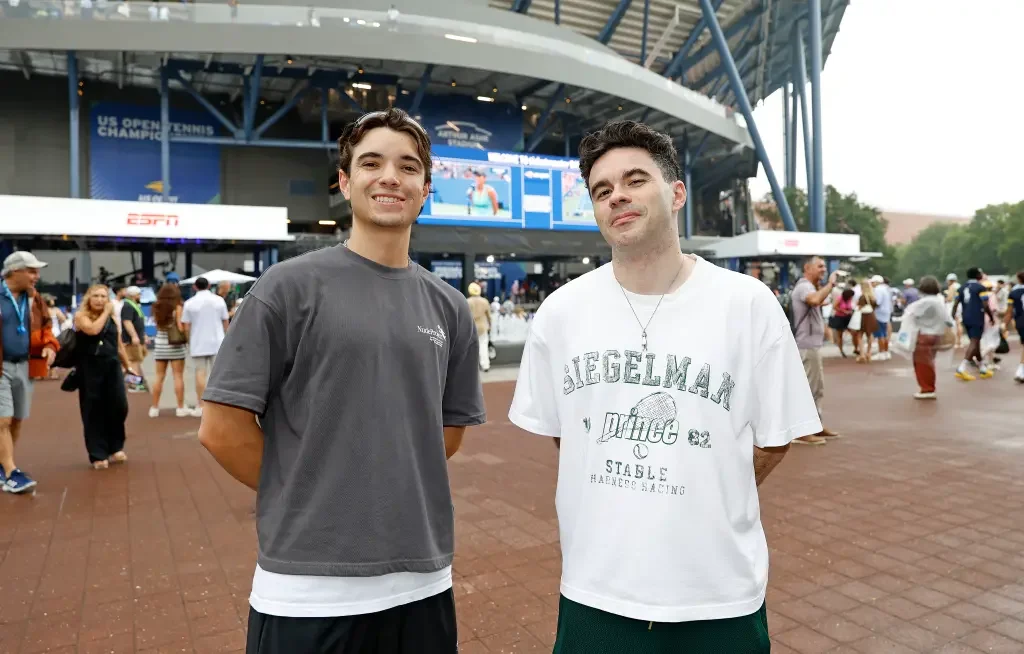
Credit: JASON SZENES FOR THE NEW YORK POST
By Lisa Parfitt
“I’m pretty sure that Influencers didn’t invent annoying people at tennis”. My response to Richard Gillis’ opening question on this week’s recording of Unofficial Partner, ‘The Spin’ to the question of the US Open’s fallout with creators.
Every few years/months/days sport likes to find something new to blame for its discomfort with change, and this year it's creators. The debate sparked by influencer behaviour at the US Open, and Wimbledon's decision not to offer dedicated creator accreditation, is a bigger conversation about who gets access to sport, who gets to tell its stories and who gets taken seriously by the industry.
To cut to the chase, creators are not the problem, poor selection, poor management, blurred lines around access and a degree of snobbery towards the creator economy are the wider issues at play here. That's not to excuse bad behaviour because it can cross the line - athletes performance should not be distracted during competition and players should not be treated as endlessly available content assets. An invite or credential is permission to work in a professional environment but let’s not use one incident to dismiss an entire creative profession.
If we're serious about growing sports audiences and maximising the value of sponsorship, we need a more nuanced conversation than "influencers are ruining sport". The creator conversation is central to sponsor value. What continues to fascinate me, however, is the way creators are still treated differently to every other media profession. Nobody puts air quotes around "journalist", “broadcaster”, “photographer” and yet "influencer" is still often delivered with a raised eyebrow and a hint of disdain and snobbery.
What lies beneath this is a discomfort with the fact that the gatekeepers have changed. For decades sport has relied on institutions to decide which stories were told and how audiences consumed them and who has access. Today, a creator with a phone can generate more engagement, more cultural relevance and a deeper audience connection than many traditional media outlets. Creators are now part of the infrastructure of sports marketing and sport has never particularly enjoyed losing control.
Almost every campaign we work on involves creators in some form they solve a genuine challenge. Sport's owned channels simply don't travel as far as they once did. Organic reach continues to decline, audience attention is fragmented and fan behaviour is increasingly platform-led. Meanwhile, creators have built communities around trust, relevance and shared interests – it’s exactly why we developed Cascade. Sponsorships are repeatedly sold on the size of their audience, yet only a fraction of that audience is actually reachable through rights holder channels. We call this the sponsorship gap. Cascade exists to bridge it by combining creators, social publishers, distribution partners and paid amplification to ensure sponsorship content reaches the audiences that matter, rather than hoping they stumble across it on an official channel. The creator conversation is central to how sponsorship works in 2026.
Ironically, many of the people dismissing creators underestimate the skill involved. The best creators are effectively media businesses of one. They are strategists, writers, presenters, editors, producers, distributors and community managers all at the same time. They understand audience behaviour with a precision that many brands and rights holders would love to possess, but too many influencer programmes are still built around reach rather than relevance.
The question isn't whether somebody is famous with a large following, the question is whether they've earned the right to tell that particular story. This summer when we were during the ICC Women’s T20 World Cup we hosted SJA award-winning creator Alex Bailess, known first and foremost for her football content. This was Alex’s first cricket match - she was curious, she learned the rules, immersed herself in the culture, spoke to supporters and genuinely tried to understand the sport (aren’t we all?!). She didn't pretend to know cricket, but she absorbed it with a genuine fascination and joy, that's what authentic creator content looks like and it works by bringing their audience that experience, “selling the vibes” as my fellow podcast guest and talent agency founder, Jo Tongue describes it.
Which brings us to the US Open. Disrupting matches is unacceptable, ring lights during play are unacceptable and yes player performance must always come first. But, long before TikTok existed, players were dealing with movement during points, hospitality excess, poorly timed noise and spectators prioritising the social occasion over the sport itself. The US Open is built on energy, entertainment, celebrity and culture and if you choose to position yourself as the most culturally open and entertainment-led tournament in tennis, you cannot be entirely surprised when the party turns up a notch.
So, how does sport manage creators going forward? Categories themselves are becoming increasingly meaningless – what exactly is the difference between a broadcaster creating social content, a digital publisher, a creator, a podcast network or a media company? The lines are blurring fast. It feels time for rights holders to stop regulating job titles and start regulating behaviour, apply their standards specific to their brand, sport and audience, educate, empower and protect athletes but set objectives and expectations. The Hundred alone has shown that creators can operate successfully within elite sporting environments when those structures exist.
Creators are now a permanent part of sport's commercial ecosystem. The industry can either spend the next decade fighting that reality or learn how to make it work better. The future is smarter creator involvement, respecting the profession and for sponsors trying to cut through increasingly fragmented audiences we’ve got Cascade for that.